
Inside Tire Mounting Paste: Why Dish Soap and WD-40 Are Destroying Your Rims
Published Date: [2026.5.22] | Category: Technical Guide / DIY Auto Maintenance
TL;DR (Key Takeaway):
Never use dish soap, soapy water, WD-40, or standard grease when mounting tires. Dish soap contains salt that causes severe rim rust, while petroleum-based lubricants (like WD-40) degrade tire rubber and cause "tire slip" during hard braking, risking a blowout. Professional Tire Mounting Paste (formulated with vegetable soap and rust inhibitors) is the only safe, fast-drying, and eco-friendly choice.
Many car enthusiasts and garage DIYers grab whatever is handy—like a bottle of kitchen dish soap or a spray lubricant—to mount a tire, hoping to save a few dollars.
However, skipping proper tire mounting paste can lead to corroded rims months later, or worse, a catastrophic failure at highway speeds. Today, we break down the chemistry and mechanics behind tire mounting lubricants by answering 4 core questions from professionals and DIYers alike.
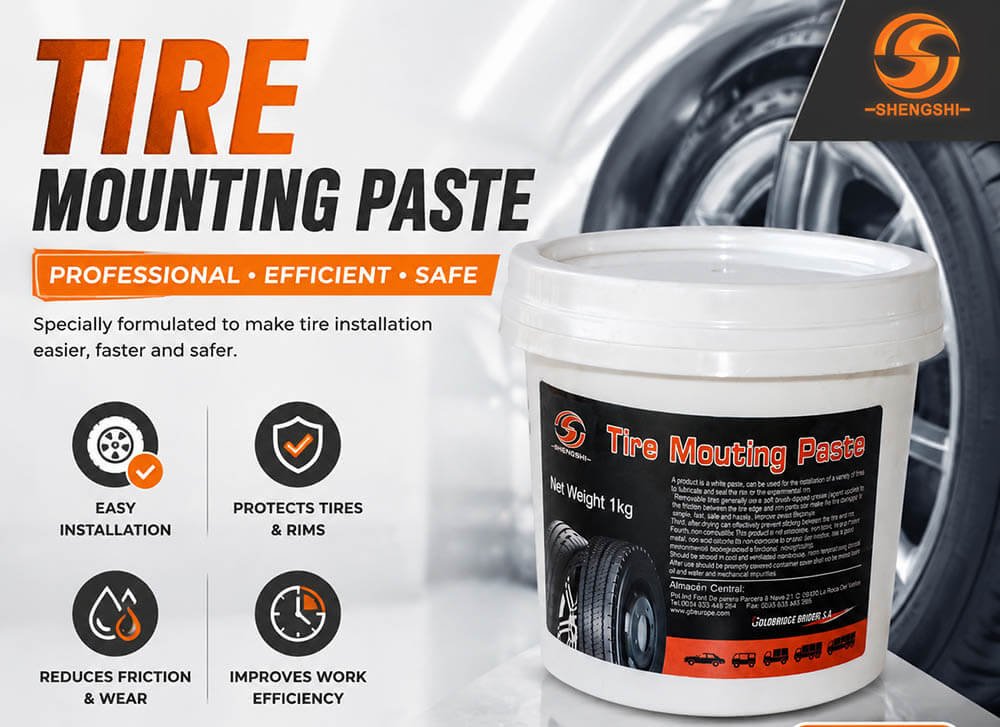
Q1: Can I use dish soap or soapy water to mount tires?
Direct Answer: Strongly Not Recommended.
This is perhaps the most common mistake made by DIYers. While dish soap provides temporary lubricity to help the tire bead slip over the rim, it leaves behind two fatal hazards:
1.Induces Severe Rust and Corrosion: Most household dish soaps contain sodium chloride (salt) to increase viscosity. When salt water is trapped in the sealed cavity between the tire and the rim, it acts as an electrolyte. This causes steel rims to rust rapidly and aluminum wheels to suffer from galvanic corrosion, pitting the bead seat and causing slow air leaks.
2.Extremely Slow Drying Causes Tire Slip: Soapy water takes forever to dry inside a sealed tire. If you drive shortly after mounting, the lack of friction means a hard brake or heavy acceleration can cause the rim to spin while the tire stays still. This is known as "tire slip," which can tear the valve stem off and cause an instant blowout.
Q2: Can I use WD-40, grease, or silicone spray to mount a tire?
Direct Answer: Absolutely not. This is a severe safety hazard.
You should never let any petroleum-based or silicone product touch your tire bead.
- Petroleum-based Destruction: Chemical solvents in WD-40, motor oil, or lithium grease trigger a chemical reaction known as "rubber swelling." They break down the synthetic rubber molecules, softening, degrading, and eventually cracking the tire bead, drastically reducing the tire's lifespan.
- The Silicone Hazard: While silicone spray is relatively safe for rubber, its fatal flaw is that it never dries. Using silicone means there will permanently be a layer of lubrication between the tire and the rim. The bead will never properly seat and lock, making it highly dangerous to drive on.
Q3: What is the best alternative to tire mounting paste?
If you are in an absolute emergency and have no mounting paste available, the only industry-tolerated, short-term alternative is a pure vegetable-based soap (like Murphy's Oil Soap) mixed with a small amount of water. It lacks destructive chemicals and dries faster than dish soap.
However, this is strictly a makeshift solution. Professional mounting paste doesn't just lubricate; it seals and protects. Here is a performance breakdown:
Tire Mounting Lubricants Comparison Chart:
| Lubricant Type | Rubber Safety | Drying Time | Rust Prevention | Recommendation |
| Pro Tire Mounting Paste | 100% Safe | Extremely Fast (Minutes) | Contains Rust Inhibitors | ☆☆☆☆☆ (Essential) |
| Liquid Tire Lube | 100% Safe | Fast | Minor Rust Inhibitors | ☆☆☆☆ |
| Pure Vegetable Soap | Safe | Moderate | None | ☆☆ (Emergency Only) |
| Dish Soap / Soapy Water | Safe | Extremely Slow (Days) | Very Poor (Salt Causes Rust) | × Do Not Use |
| WD-40 / Standard Grease | Corrodes Rubber | Never Dries | Yes | × Do Not Use |
Q4: What is tire mounting paste made of? Is it eco-friendly?
Direct Answer: Yes, high-quality mounting paste is highly eco-friendly, non-toxic, and typically 100% biodegradable.
Unlike household cleaners, professional tire mounting paste (whether white, black, or yellow) is formulated in a solid or semi-solid state for specific mechanical reasons. Its core ingredients include:
- Vegetable Soap Base (e.g., Potassium Oleate):Provides extreme, non-corrosive lubricity. It allows even the stiffest run-flat or low-profile tires to slip easily over the rim without tearing the bead.
- Moisture Control Agents (Glycols):Ensure the paste flashes off (dries) within minutes of exposure to air. Once dry, the lubricity disappears and acts as a mild adhesive sealant, preventing tire slip.
- Corrosion Inhibitors:This is what plain soap lacks completely. These additives form a protective film on the bare metal of the rim, defending it against winter road salt and water intrusion.
Conclusion
When it comes to vehicle maintenance, doing it right is far more important than doing it cheap. A single bucket of high-quality tire mounting paste can mount hundreds of tires, making the cost per application virtually zero. Using the correct chemical product is a basic requirement for driving safety and protecting expensive wheels.
(This guide is brought to you by the Technical Support Team at Shengshiweiye. To explore tire mounting consumables that meet international safety standards, please visit our product center.)
B2B Call-to-Action
Your reputation as a distributor or auto shop depends on the reliability of your materials. Partner with a direct manufacturer that guarantees high-tack, fast-vulcanizing tire repair products.
OEM/ODM Custom Packaging & Bulk Supply