
Professional Tire Mounting Paste Guide: Benefits, Applications & Best Practices
Why Professional Tire Mounting Paste Matters in Modern Tire Service
As tire technology continues to evolve, proper tire installation has become more important than ever. Modern low-profile tires, run-flat tires, performance tires, and heavy-duty commercial tires place greater demands on technicians and installation equipment.
One product that plays a critical role in successful tire mounting is tire mounting paste, also known as tire mounting lubricant, tire mounting compound, or tire bead lubricant.
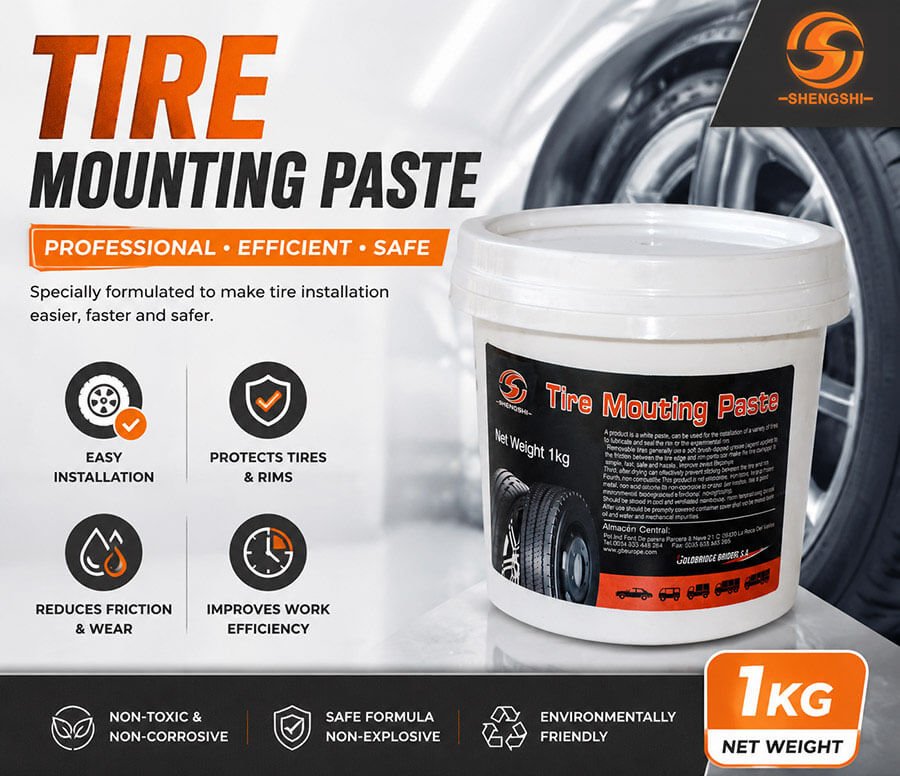
Designed specifically for tire service applications, professional mounting paste reduces friction during installation, helps the tire bead seat properly, protects wheel surfaces, and minimizes the risk of tire slippage after mounting.
For tire shops, fleet maintenance centers, motorcycle workshops, and DIY enthusiasts, choosing the right mounting lubricant can significantly improve installation efficiency and long-term wheel performance.
Why Dish Soap Is Not a Recommended Tire Lubricant
One of the most common questions searched online is:
"Can I use dish soap instead of tire mounting paste?"
The short answer is no.
Although dish soap may temporarily reduce friction, it was never designed for tire installation.
Problems with Dish Soap
| Dish Soap | Professional Tire Mounting Paste |
|---|---|
| Contains water and cleaning agents | Formulated specifically for tire mounting |
| May accelerate rim corrosion | Contains rust inhibitors |
| Slow drying time | Quick drying formula |
| Can contribute to tire slippage | Helps lock the bead into position |
| Not optimized for rubber compounds | Safe for tire rubber and wheel finishes |
Professional tire mounting paste dries after installation, helping stabilize the tire bead and reducing the possibility of tire movement on the rim during acceleration or braking.
Can WD-40, Grease, or Silicone Spray Be Used?
Another frequently searched question is:
"Can I use WD-40, grease, or silicone spray to mount a tire?"
Industry professionals generally advise against using petroleum-based lubricants.
Potential Risks
- Rubber degradation over time
- Reduced bead stability
- Increased tire slippage
- Contamination of TPMS components
- Difficulty achieving proper tire balance
Professional tire mounting compounds are engineered to provide temporary lubrication during installation while maintaining long-term tire safety.
What Is Tire Mounting Paste Made Of?
Modern tire mounting paste is typically formulated using:
- Plant-based soaps
- Specialized lubricating agents
- Rust inhibitors
- Protective polymers
- Biodegradable additives
Many premium products are non-toxic, environmentally responsible, and safe for both steel and aluminum alloy wheels.
The exact formulation varies depending on intended applications, such as passenger vehicles, commercial trucks, motorcycles, or off-road equipment.
Tire Mounting Paste vs. Liquid Tire Lubricant
Tire shops often compare mounting paste with liquid tire lubricants when selecting workshop consumables.
Comparison Table
| Feature | Tire Mounting Paste | Liquid Tire Lubricant |
|---|---|---|
| Lubrication Strength | High | Medium |
| Product Consumption | Lower | Higher |
| Drying Speed | Fast | Moderate |
| Run-Flat Tire Performance | Excellent | Good |
| Heavy Truck Tires | Recommended | Acceptable |
| High-Volume Service Bays | Good | Excellent |
| Storage Stability | Excellent | Good |
For difficult tire installations, especially run-flat and low-profile tires, mounting paste is often preferred due to its superior lubricating performance and controlled drying characteristics.
Which Tire Mounting Paste Is Best for Run-Flat Tires?
Run-flat tires feature reinforced sidewalls that make mounting significantly more challenging.
Professional technicians typically recommend mounting compounds that offer:
- High lubricity
- Fast drying characteristics
- Excellent bead seating support
- Compatibility with TPMS systems
- Strong adhesion during installation
These features help reduce mounting force and improve bead seating reliability.
How to Apply Tire Mounting Paste Correctly
Proper application is essential for achieving optimal results.
Step 1: Clean the Wheel
Remove dirt, rust, old lubricant residue, and debris from the wheel rim.
Step 2: Apply a Small Amount of Paste
Use a mounting brush to apply a thin and even layer.
Step 3: Lubricate the Tire Bead
Apply the paste around both tire beads.
Step 4: Lubricate the Rim Flange
Coat the wheel contact surfaces where the tire bead will seat.
Step 5: Mount the Tire
Proceed with installation using the tire changer.
Step 6: Inflate and Seat the Bead
Inflate according to manufacturer recommendations and verify proper bead seating.
Excess lubricant should be avoided because over-application may contribute to tire movement during operation.
Where Should Tire Mounting Paste Be Applied?
The mounting compound should be applied only to:
- Tire beads
- Rim flanges
- Bead seating areas
It should not be applied to:
- Tread surfaces
- Brake components
- TPMS electronic modules
- Wheel bolt or lug nut areas
Proper placement improves installation efficiency while minimizing contamination risks.
Does Tire Mounting Paste Need to Be Mixed with Water?
The answer depends on the product type.
Ready-to-Use Paste
- Used directly from the container
- No dilution required
- Preferred by many tire service centers
Concentrated Paste
- Requires mixing according to manufacturer instructions
- Offers lower transportation costs
- Suitable for high-volume operations
Always follow the recommended dilution ratio for consistent performance.
How Long Does Tire Mounting Paste Take to Dry?
Drying time depends on:
- Ambient temperature
- Humidity
- Product formulation
- Application thickness
Most professional tire mounting compounds begin drying within a few minutes and fully stabilize shortly after installation.
Fast drying helps prevent tire slippage and supports more accurate wheel balancing.
Can Tire Mounting Paste Help Prevent Rim Corrosion?
High-quality mounting compounds often contain anti-corrosion additives.
These additives help:
- Protect steel wheels
- Reduce oxidation
- Minimize moisture-related corrosion
- Extend wheel service life
This benefit is especially important in regions exposed to road salt, snow, coastal humidity, and harsh winter conditions.
Why Is the Tire Bead Still Difficult to Seat?
Even when mounting paste is used, bead seating issues may still occur.
Common causes include:
- Insufficient air flow
- Damaged tire beads
- Deformed wheel rims
- Inadequate lubrication
- Incorrect tire size
- Cold weather installation conditions
In such cases, technicians should inspect both the tire and wheel before attempting reinflation.
Winter Tire Service Considerations
In colder climates, standard lubricants may become less effective.
Many professional workshops use winter-grade tire mounting paste, which offers:
- Improved cold-weather performance
- Freeze resistance
- Consistent lubrication
- Faster bead seating in low temperatures
This is particularly important in North America, Northern Europe, and other regions with severe winter conditions.
Industry Outlook
As tire designs become more sophisticated and vehicle manufacturers continue adopting low-profile and run-flat technologies, professional tire mounting lubricants are increasingly viewed as essential workshop consumables rather than optional accessories.
For tire dealers, service centers, fleet operators, and independent repair shops, selecting a high-quality tire mounting paste can improve installation efficiency, protect wheel surfaces, reduce service issues, and support safer vehicle operation.
Get a Bulk Quote / Inquiry:
If you are looking for a reliable supplier or need a custom wholesale price, contact our sales representative instantly via WhatsApp or Email.