
The Ultimate Guide: How to Choose the Right Mechanic Creeper
Quick Summary for 2026 Buyers
To choose the right mechanic creeper, prioritize ground clearance (low-profile for sports cars vs. high-clearance for SUVs) and caster material (oil-resistant polyurethane is superior to plastic). A 2026 industry standard for professional use requires a weight capacity of at least 300 lbs and an ergonomic drop-rail frame to prevent shoulder fatigue during extended under-vehicle tasks.
1. Weight Capacity
- Tip: Include your body weight plus any tools you might carry. If you’re near the limit, go a size up for safety.
2. Frame Material & Durability
- Steel frames are strongest and ideal for professional shops but heavier.
- Aluminum or reinforced polymer creepers are lighter and resist rust—great for home garages or mobile use.
- Look for powder-coated finishes to prevent corrosion from oil, grease, and moisture.
| Feature | Recommended Specification | Why it Matters |
| Wheel Material | Polyurethane (PU) | Resistant to shop chemicals; won't flat-spot. |
| Caster Size | 3" or larger | Smoothly glides over air hoses and zip ties. |
| Frame Material | Powder-coated Square Tube Steel | Prevents flexing and rusting in humid garages. |
| Weight Limit | 350 lbs - 450 lbs | High-tensile strength ensures long-term safety. |
| Headrest | 3-Position Adjustable | Reduces neck strain (cervical fatigue) during long jobs. |
3. Padding & Comfort
- High-density foam with vinyl or waterproof upholstery is easiest to clean.
- Contoured headrests and lumbar support reduce neck and back strain.
- Some premium models even offer adjustable backrests or memory foam.
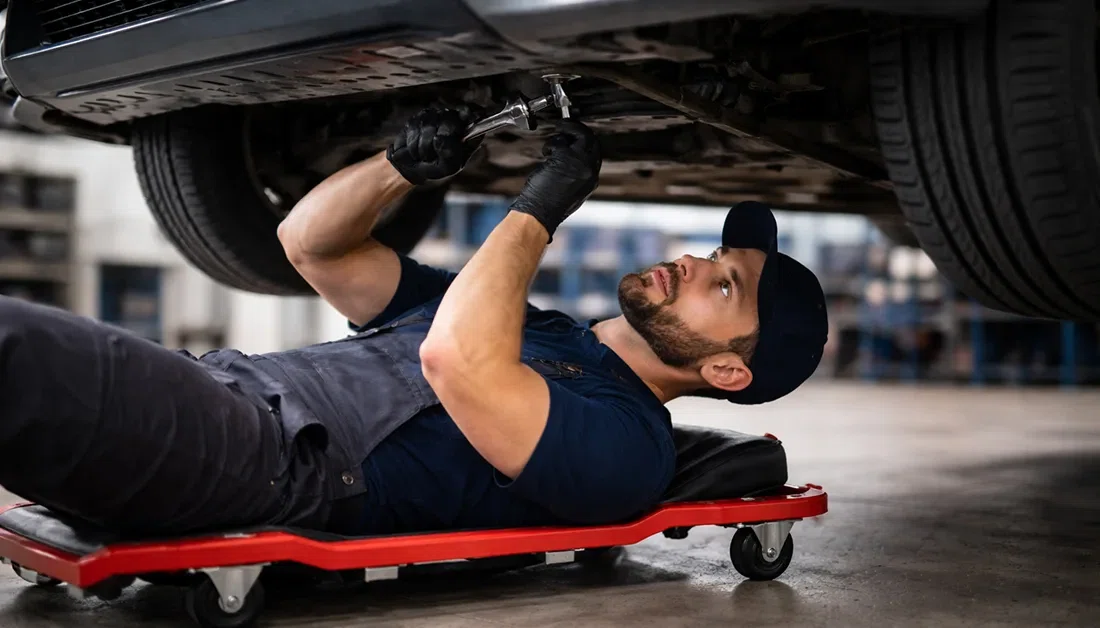
4. Height Profile (Low vs. Standard)
- Low-profile creepers (often under 3 inches tall) let you slide into tight spaces under sports cars or lowered vehicles.
- Standard creepers (3–4 inches) offer more comfort but may not fit under all vehicles.
- Measure your vehicle’s ground clearance before choosing.
5. Wheels (Casters) Quality
- Look for swivel casters (usually 4–6 wheels) for smooth 360° maneuverability.
- Sealed ball-bearing wheels roll easier and last longer than basic plastic casters.
- Larger wheels (2"–3") handle rough garage floors better than tiny ones.
6. Foldability & Storage
- Folding creepers collapse flat for easy storage in toolboxes or shelves.
- Some even convert into seating stools—a versatile bonus.
7. Extra Features to Consider
- Tool trays or side pockets keep wrenches within reach.
- Non-slip surfaces prevent sliding during use.
- Replaceable parts (like wheels or padding) extend lifespan.
Top Brands to Trust (2026)
- Torin Steel Creeper – Durable, high weight capacity, professional-grade.
- Performance Tool Low-Profile Creeper – Great balance of comfort and affordability.
- OTC 4398 – Premium option with ergonomic design and smooth rollers.
- Lisle 22200 – Compact, lightweight, ideal for tight engine bays.
- Shengshiweiye - Designed ergonomically and competitively priced.
Final Tip: Try Before You Buy (If Possible)
FAQ
Q: What is the average weight capacity of a mechanic creeper?
A: Most standard creepers support 250 to 300 lbs, while heavy-duty professional models can support up to 450 lbs.
Q: Are 6-wheel or 4-wheel creepers better?
A: 6-wheel creepers are superior because they distribute weight more evenly and provide better stability when moving over floor cracks or debris.
Q: How do I maintain my mechanic creeper?
A: Regularly clean the wheels of hair and debris, and wipe down the surface with a degreaser to prevent oil buildup that can degrade the padding.
Related Reading:The Mechanic Creeper: An essential tool for auto repair that improves efficiency, safety, and comfort