
Wheel Weight Materials Comparison
Wheel Weight Materials Comparison
Modern wheel balancing requires more than just mechanical precision; it demands a deep understanding of the materials that counteract rotational imbalance. As global regulations shift away from toxic heavy metals, tire service professionals and automotive manufacturers must navigate the distinct physical and economic profiles of lead, zinc, and steel. Selecting the right material directly impacts rim aesthetics, corrosion resistance, and long-term balancing stability.
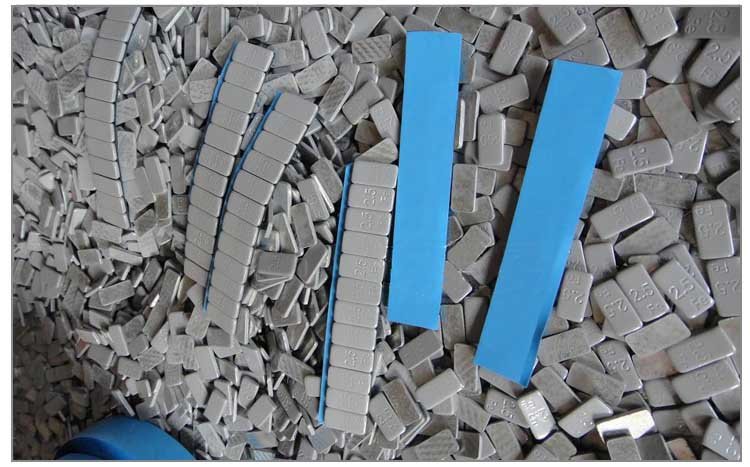
2.5*12 wheel balance weight
Common Wheel Weight Materials
1. Wheel Weight Materials Comparison-Lead Wheel Weights
Features:
- Precise weight and easy to manufacture
- Long history of usage
Considerations:
- Toxic and restricted by environmental regulations
- Not recommended for electric vehicles or high-end cars

2.Wheel Weight Materials Comparison- Steel Wheel Weights
Features:
- Environmentally friendly and safe
- Cost-effective and suitable for most vehicles
Considerations:
- Prone to rust; requires anti-corrosion coating or regular inspection
- Slightly lighter than lead, proper sizing is essential
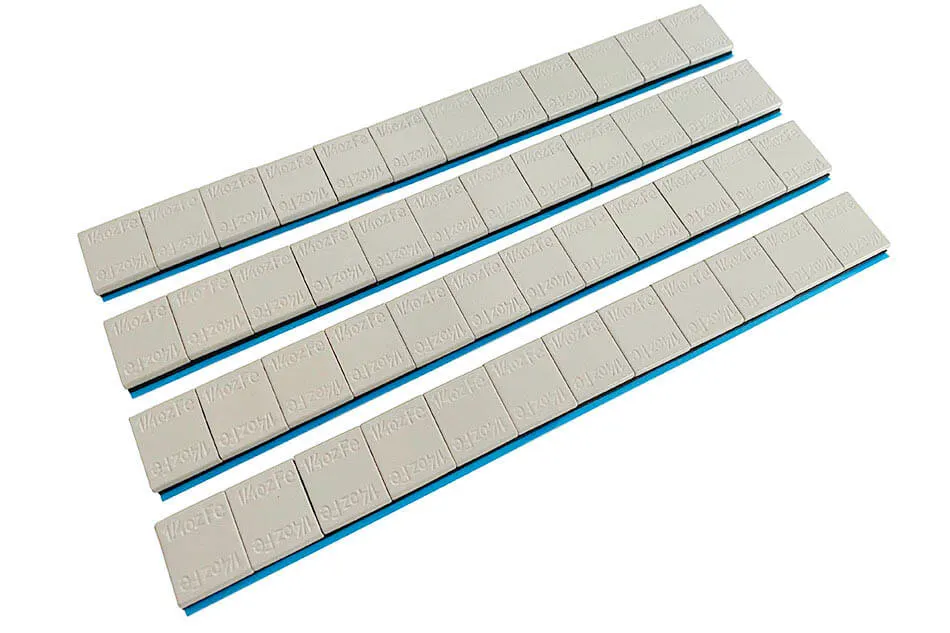
3. Zinc-Coated Steel Wheel Weights
Features:
- Excellent corrosion resistance and durability
- Attractive appearance, ideal for aluminum alloy wheels
Considerations:
- Slightly higher cost than plain steel
- Take care not to damage the coating during installation
4. Zinc Alloy Wheel Weights
Features:
- Lightweight and aesthetically pleasing, perfect for premium vehicles
- High corrosion resistance, suitable for humid or coastal environments
Considerations:
- Higher cost and complex manufacturing process
- Requires proper installation tools

Wheel Weight Materials Comparison Table
| Material | Advantages | Disadvantages | Suitable Vehicles | Cost | Durability | Environmental Friendliness |
|---|---|---|---|---|---|---|
| Lead | Accurate weight, easy to manufacture | Toxic, restricted by regulations | Older cars, trucks | Medium-Low | High | Poor |
| Steel | Eco-friendly, safe, cost-effective | Prone to rust | EVs, light cars | Medium | Medium | Good |
| Zinc-Coated Steel | Corrosion-resistant, durable, visually appealing | Higher cost | All vehicles | Medium-High | High | Good |
| Zinc Alloy | Lightweight, attractive, highly corrosion-resistant | High cost, complex manufacturing | Premium cars, aluminum alloy wheels | High | High | Good |
Visual suggestion: Include photos of each material and installation examples next to the table for better readability and credibility.
Lead vs Steel: The Density and Volume Trade-off
For decades, lead was the industry standard due to its high density (11.34 g/cm³) and low melting point. However, the transition to steel has fundamentally changed the visual and functional footprint of wheel weights. Because steel is significantly less dense (approximately 7.8 g/cm³), a steel weight must be roughly 30% to 40% larger in volume than its lead counterpart to achieve the same mass. This volume increase presents specific challenges in modern wheel balancing, particularly with high-performance vehicles featuring tight clearances between the brake caliper and the rim.
- Footprint: Steel adhesive weights often require longer strips, which can complicate placement on narrow rims.
- Flexibility: Unlike lead, which is soft and easily contoured to the rim's radius, steel is rigid. To compensate, manufacturers design steel segments with deeper grooves to allow for better adhesion on curved surfaces.
- Durability: Steel is prone to oxidation. High-quality steel weights must utilize advanced zinc plating or epoxy coatings to prevent unsightly rust streaks on alloy wheels.
The Rise of Zinc Wheel Weights: Precision and Malleability
Zinc wheel weights occupy the middle ground between the traditional density of lead and the rigidity of steel. With a density of 7.14 g/cm³, zinc is slightly less dense than steel, but its mechanical properties offer unique advantages for premium automotive applications. Many European OEMs prefer zinc because it can be die-cast into precise shapes, offering a higher degree of dimensional accuracy than stamped steel.
The primary benefit of zinc is its malleability. Similar to lead, zinc can be adjusted slightly to fit the rim's contour without the spring-back effect often seen in lower-quality steel clips. Furthermore, zinc is naturally more corrosion-resistant than raw steel. When used as a weight material, it eliminates the risk of galvanic corrosion between the weight and the aluminum wheel, a common failure point in harsh, salt-heavy winter environments.
Navigating Environmental Impact and Regulatory Compliance
The move away from lead is not merely a preference but a regulatory mandate in many jurisdictions. The European Union’s End-of-Life Vehicles (ELV) Directive and various state-level bans in the U.S. have effectively phased out lead from the supply chain. This shift is driven by the environmental risk posed when weights are shed on roadways, eventually leaching into groundwater systems.
Transitioning to steel or zinc wheel weights aligns with corporate sustainability goals and Green Workshop certifications. While steel is the most cost-effective and environmentally neutral option—being highly recyclable—zinc remains a specialized alternative for shops prioritizing OEM-spec fitment and ease of application. Professional service centers must weigh the higher unit cost of zinc against its superior fitment characteristics, whereas steel remains the high-volume choice for general passenger vehicle maintenance.
Operational efficiency in a modern tire shop depends on stocking the correct weight profiles for an increasingly diverse range of alloy wheels. Understanding that steel requires more surface area for adhesion while zinc provides a closer approximation to legacy lead fitment allows technicians to deliver a more precise balance and a cleaner aesthetic finish.
Frequently Asked Questions
Q1: Are lead wheel weights still allowed?
A: Some countries and regions have restricted lead weights. Steel or zinc-coated steel is recommended for compliance with environmental regulations.
Q2: How long do different materials last?
A: Lead weights are durable but prone to corrosion. Steel and zinc-coated steel can last 3–5 years. Zinc alloy is ideal for premium vehicles with long-lasting performance.
Q3: Which material is best for electric vehicles?
A: Steel, zinc-coated steel, or zinc alloy are recommended for safety, durability, and environmental friendliness.
Q4: Any tips for installing wheel weights?
A: Keep wheels clean, use proper tools to secure weights, and periodically check for loosening or damage.
Contact Us
Want to learn more about wheel weight materials or request samples for your vehicle? Click the button below:
[Request a Quote / Contact Us]
Recommended: Add a form or popup inquiry at the bottom to increase lead generation and conversion rates.