Pair of 3 Ton Jack Stands with 6,000 lb Capacity
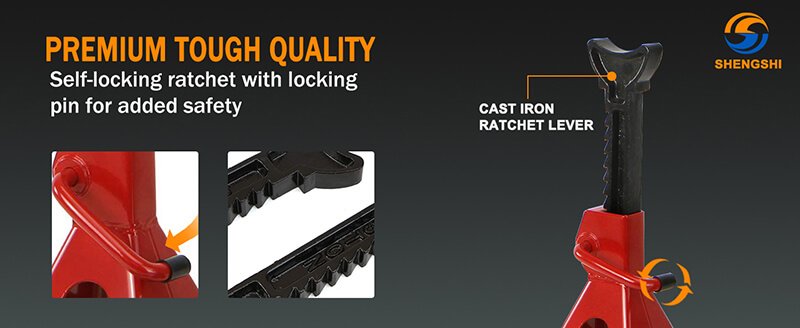
Self-locking ratchet means no locking wrench is necessary; meets ASME PASE-2014 safety standard for portable automotive service equipment
The stand can be raised or lowered to the required height; Self-locking ratchet for ease of use
Durable steel frame with stainless coating; easy to read weight capacity
How To Use Jack Stands
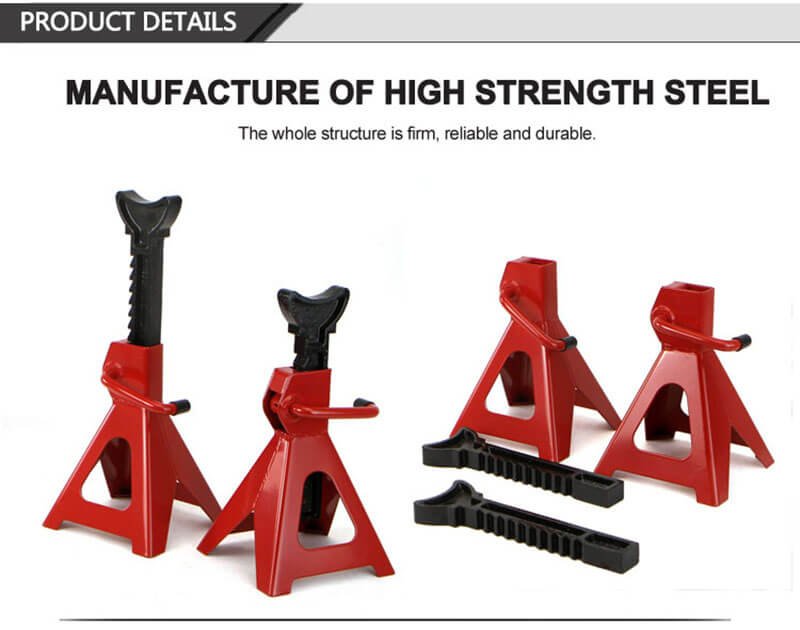


| MODEL | RATEDLOAD | RATEDLOAD | MINIMUM
HEIGHT |
MAXIMUM
HEIGHT |
BASE
WIDTH |
RACK
THICKNESS |
N.W/G.W |
| SS-002 | 2T | 275mm | 420mm | 175mm | 23mm | 78mm | 5/5.3kg |
| SS-003 | 3T | 285mm | 425mm | 180mm | 27mm | 85mm | 6.3/6.7kg |
| SS-006 | 6T | 3905mm | 425mm | 260mm | 30mm | 100mm | 12.4/13.4kg |
Jack Stands About this article
Lightweight jack stands are used to support your vehicle after lifting it with a jack; Wide pyramid foot base provides added strength and stable support
Constructed of high-quality forged steel with a welded frame design for durability, it handles a wide range of vehicles, including small cars, SUVs, and light trucks
Adjustable height range from 10-13/16" to 16-9/16" with a 2 ton (4,000 lb) load capacity
The multi-position ratcheting bar has a sawtooth design, allowing for quick height adjustments that lock into place
It has a large saddle surface for better contact with the supported load; Tested for reliability and safety to meet ASME standards
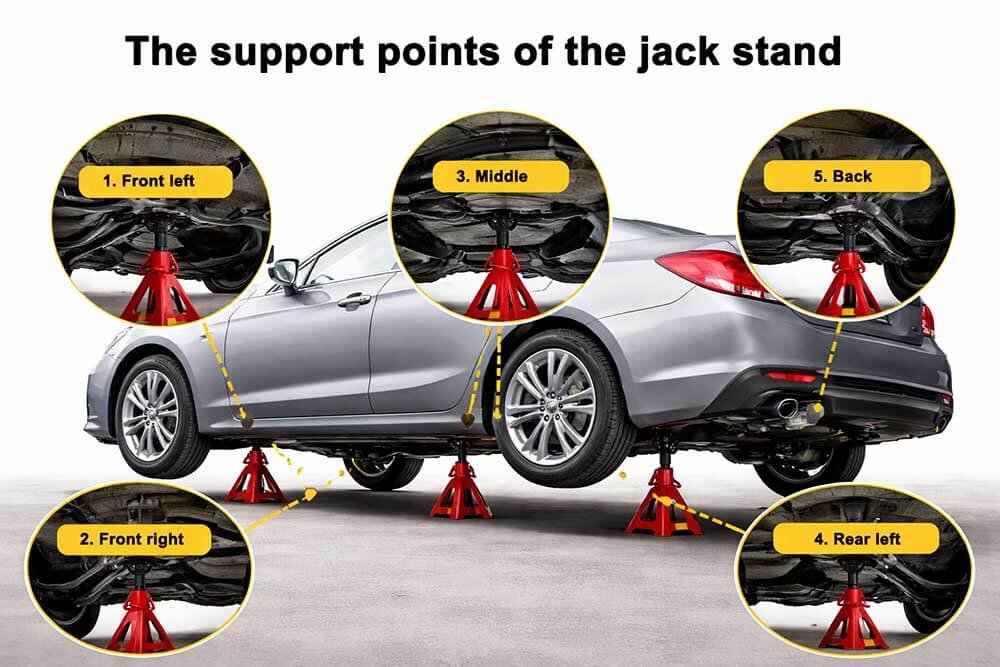
The support points of the jack stands
 |
How To Use Jack Stands |
 Contact Us
Jack Stands FAQ
1. How to use jack stands safely?
Answer:
To use jack stands safely, first lift the vehicle with a hydraulic or electric jack on a flat, solid surface. Place the jack stands under the manufacturer-recommended support points, then slowly lower the vehicle onto the stands. Always engage the locking mechanism and never work under a car supported by a jack alone.
2. Where should jack stands be placed under a car?
Answer:
Jack stands should be placed at the vehicle’s designated support points, such as the pinch welds, frame rails, or reinforced areas specified in the owner’s manual. These points are designed to support the vehicle’s weight safely. Never place jack stands under the oil pan, exhaust system, or plastic body panels.
3. Are jack stands safer than a hydraulic jack?
Answer:
Yes, jack stands are safer than a hydraulic jack for supporting a vehicle. A jack is designed to lift a car, not to hold it for extended periods. Jack stands provide stable, mechanical support and significantly reduce the risk of sudden vehicle collapse during maintenance or repairs.
4. Is it safe to work under a car supported only by a jack?
Answer:
No, it is not safe to work under a car supported only by a jack. Hydraulic and electric jacks can fail due to leaks, mechanical issues, or instability. Jack stands are essential because they provide a solid, locked support that protects against sudden drops while working under the vehicle.
5. Why are jack stands necessary for car repairs?
Answer:
Jack stands are necessary because they securely support the vehicle’s weight during repairs. They prevent accidental lowering or collapse that can occur when relying on a jack alone. Using jack stands greatly improves safety when performing tire changes, brake work, or under-car inspections.
6. What are the correct jack stand support points?
Answer:
Correct jack stand support points include reinforced pinch welds, frame rails, subframes, or axle housings, depending on the vehicle type. These points are engineered to handle the vehicle’s weight. Always refer to the owner’s manual to identify the correct support locations before positioning jack stands.
7. How much weight can jack stands support?
Answer:
Jack stands are rated by capacity, such as 2-ton, 3-ton, or higher. The rating usually applies to a pair of stands, not a single stand. Always choose jack stands with a weight rating higher than your vehicle’s total weight to ensure safe and stable support.
8. Can jack stands be used on uneven ground?
Answer:
Jack stands should not be used on uneven or soft ground. An unstable surface can cause the stands to shift or tip over. For safe use, always place jack stands on a flat, solid surface such as concrete, and avoid gravel, dirt, or sloped areas.
9. Should wheels be chocked when using jack stands?
Answer:
Yes, wheels should always be chocked when using jack stands. Wheel chocks prevent the vehicle from rolling while it is lifted and supported. This added safety step is especially important when working on sloped surfaces or when only one end of the vehicle is raised.
10. What happens if you don’t use jack stands?
Answer:
If jack stands are not used, the vehicle may suddenly drop if the jack fails or shifts. This can cause serious injury, vehicle damage, or death. Jack stands are a critical safety tool that provides reliable support and significantly reduces the risk during vehicle maintenance.
Next: Scissor Jacks Car Jack Kit Tire Jack Tool