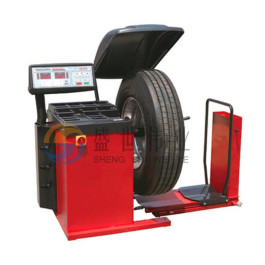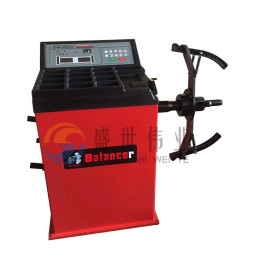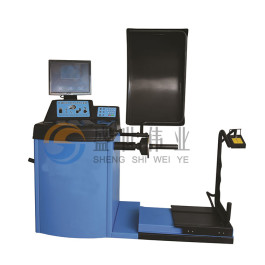

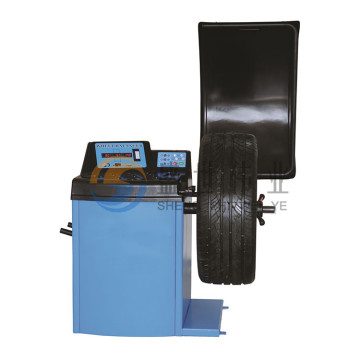
Balancing machine S - T 891
The Balancing machine S - T 891 is an automatic digital tire balancer designed to accurately detect and correct wheel imbalance in passenger cars and light vehicles.
Supporting both dynamic and static balancing modes, the S‑T891 improves driving comfort, extends tire life, and enhances vehicle stability by providing precise imbalance measurement and guided weight placement.
Modern wheel balancing machines use sensor‑driven measurement and microprocessor control to calculate wheel imbalance efficiently, reducing human error and improving workshop productivity. This makes them essential equipment for professional tire service centers and automotive repair shops.

Shengshiweiye balancing machine S - T 891
Power supply voltage:220 v / 50 to 60 hz / 1 ph
Power: 0.25 Kw
Rotating speed: ~ 215 r. p.
Balance cycle: 10 s
Largest wheel weight: 100 kg
Rim diameter: 254 ~ 660 mm
Rim width: 38 ~ 508 mm
Largest wheel diameter: 1000 mm
Net weight/gross weight: 125 kg / 145 kg
1. According to the present larger, heavier tires for production
2. With high measurement precision, repetition measurement precision accuracy characteristics
3. Make up for the most current balancing machine for large low tire balance accuracy of defects
4. Use high quality Φ 40 balancing machine spindle, to ensure the accuracy of measurement and meet the requirements of large tires measurement
5. High strength increasing casing, to ensure the stability of the measurement precision
6. The six big torque and low speed motor, can guarantee the stability of large tires start and brake and the safety of the operation"
"7. With functions of automatic measuring rim diameter and distance
8. With functions of automatic detection and restoring the measuring precision of the calibration function
9. Adopts high brightness LED digital display, no matter the light and shade can clear display digital measurement
10. Optional 901 tyres elevator to facilitate large and heavy tires in balancing machine loading and unloading"
How It Works
- Mount the wheel on the balancer shaft
- Set wheel parameters (diameter, width, distance)
- Start the machine → wheel spins automatically
- Sensors detect imbalance and calculate deviation
- Digital display indicates weight positions
The machine calculates the exact imbalance and guides the technician to place corrective weights with precision.
Key Features & Benefits
Professional‑Grade Balancing Accuracy (±1g)
- Detects minor imbalance accurately
- Enhances driving comfort and safety
- Reduces:
- Steering wheel vibration
- Uneven tire wear
- Suspension stress
Precision balancing is critical for vehicle performance and customer satisfaction.
Dual Balancing Modes
- Dynamic Mode: Corrects both vertical and lateral imbalance
- Static Mode: Ideal for basic single‑plane balancing
- Works with both steel and alloy wheels
Fast & Efficient Operation
- Quick cycle times (≈6–10 seconds per wheel)
- Automatic measurement and computation
- Boosts service capacity in busy workshops
User‑Friendly Digital Interface
- Clear digital display
- Simple wheel parameter input
- Automatic weight calculation with guidance
Durable Build for Commercial Use
- Heavy‑duty shaft and stable design
- Built for daily workshop operations
- Low maintenance requirement
 Contact Us
Balancing machine S - T 891 Typical Applications
- Tire shops and service centers
- Auto repair garages
- Car dealerships and maintenance centers
- Fleet service facilities
- Garage workshops
Balancing machine S - T 891 FAQ
What is a wheel balancing machine?
A wheel balancing machine measures and corrects weight imbalance in wheels to ensure smooth rotation and improved vehicle performance.
Why is wheel balancing important?
Unbalanced wheels can cause vibration, uneven wear, and reduced driving comfort. Proper balancing enhances handling and tire life.
How accurate is the S‑T891?
This model delivers ±1g precision, meeting professional workshop standards.
How long does balancing take?
Typically 6–10 seconds per wheel, depending on wheel size and setup.
Which vehicles can it balance?
Suitable for passenger cars, SUVs, and light commercial vehicles.